



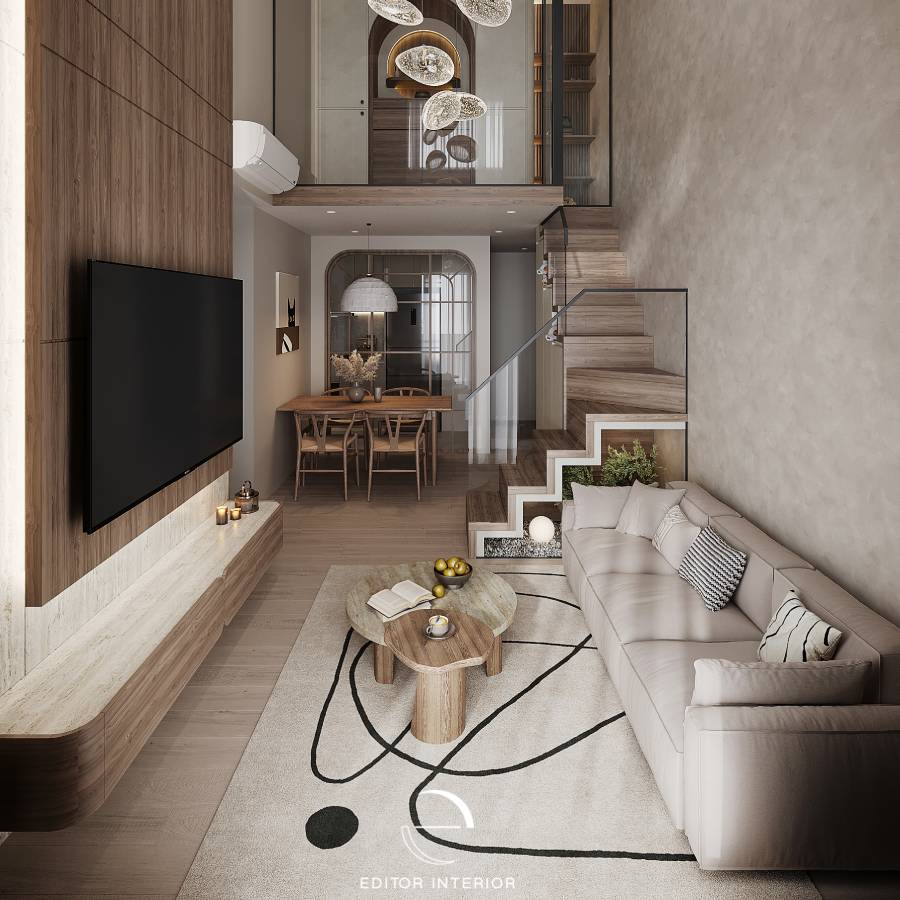
Loft units have a reputation for feeling open, but that openness does not happen on its own. Without careful planning, a double-volume space can feel unfinished rather than spacious, and a split-level layout can end up feeling more disjointed than dynamic. At Forett at Bukit Timah, this loft interior design project shows how specific, deliberate decisions at every level of the home work together to make the space feel larger, warmer, and more liveable than the floor plan alone would suggest.
1. Using Vertical Height as a Design Feature
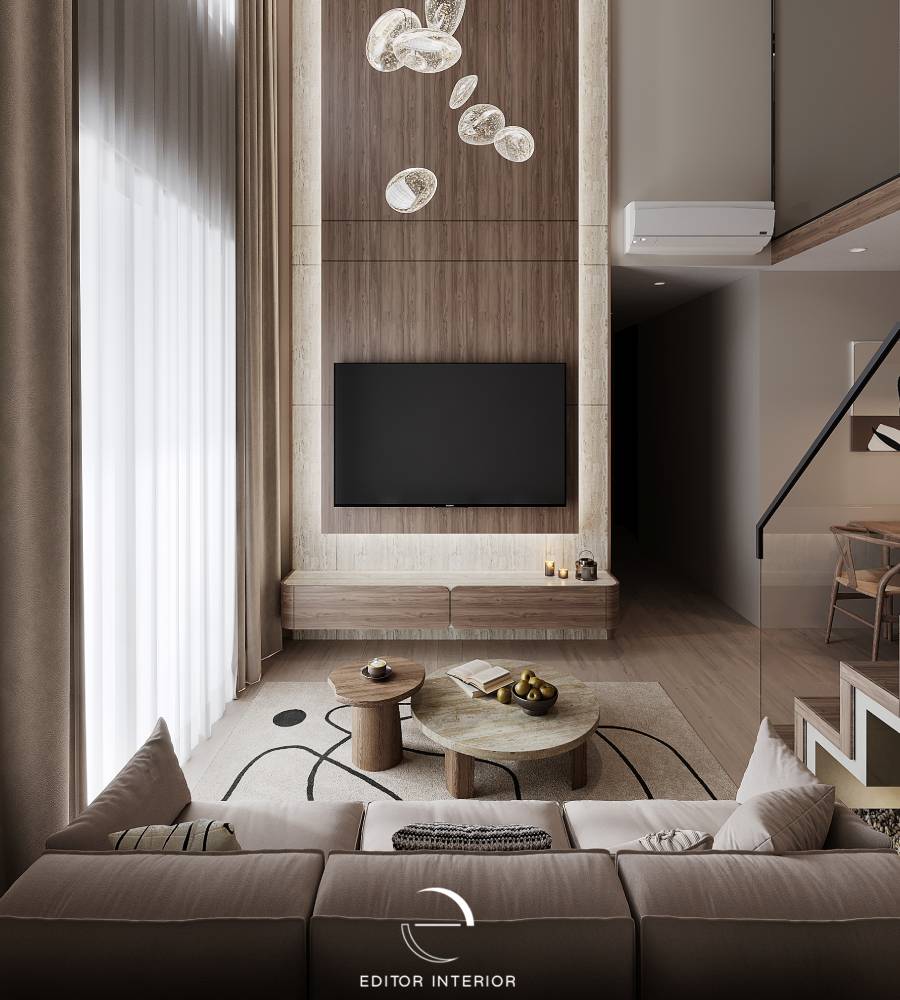
The double-volume ceiling in the living area is the first thing you notice, and the way it is handled sets the tone for the rest of the home. Rather than leaving the upper portion of the wall as empty space, a cascading cluster of glass globe pendants drops down from the ceiling level, drawing the eye upward and giving the height a sense of purpose. The TV feature wall, clad in warm wood veneer with a travertine-effect surround, extends from floor to near-ceiling height, reinforcing the vertical emphasis without competing with the pendant installation above it.
When vertical volume is treated as part of the design rather than simply a by-product of the unit type, it becomes one of the most effective tools for making a space feel generous and one of the first things worth planning for when working with a loft layout.
2. Keeping the Palette Tight and Warm
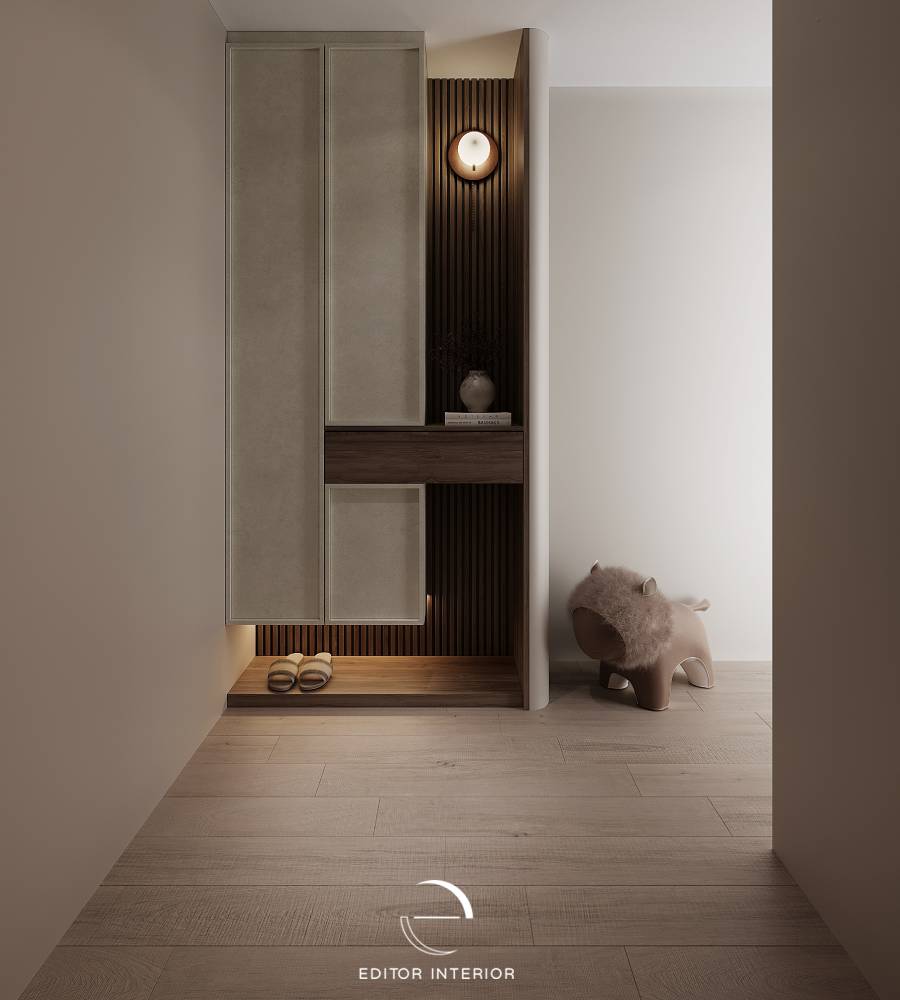
Throughout the home, the palette stays within a narrow range of warm neutrals: taupe walls, sandy upholstery, light timber flooring, and wood-veneer cabinetry in a consistent honey-to-walnut tone. This kind of restraint has a direct effect on how large a space feels. When surfaces share a similar warmth and value, the eye moves across them without interruption, which makes the room read as more continuous and therefore more spacious.
3.Treating the Staircase as Usable Space 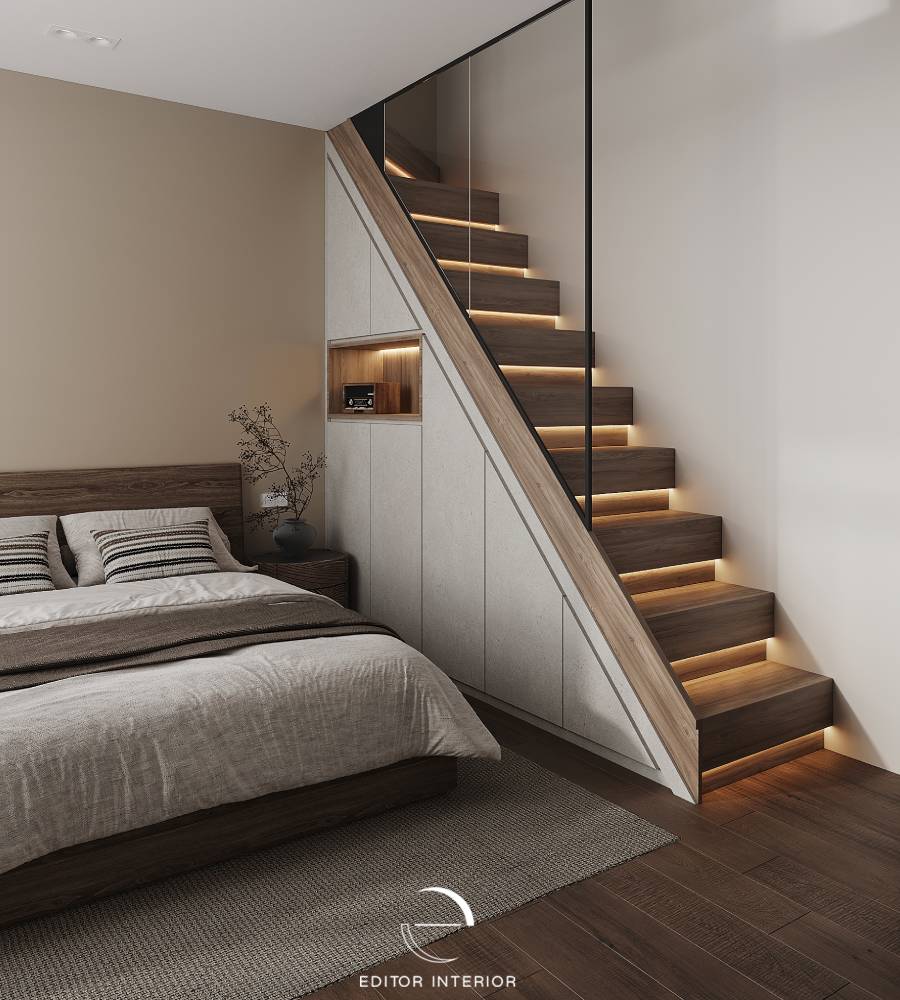
In many loft units, the staircase takes up floor area without giving much back. Here, the underside of the staircase has been fully built out with concealed storage and a recessed display niche, lit with warm LED strips. The result is a staircase that contributes to both the storage and the atmosphere of the bedroom it passes through, rather than simply being a structural requirement.
4. Designing the Altar Room to Belong
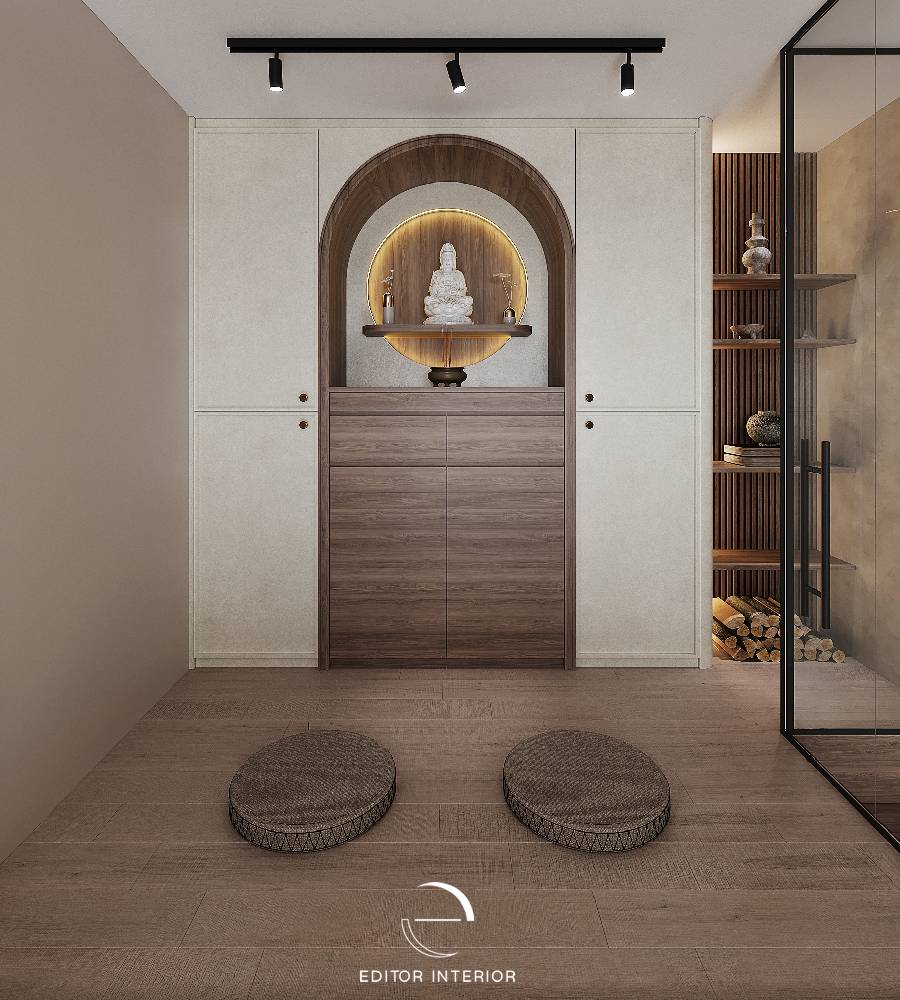
Altar rooms are a common requirement in many Singapore homes, and they are often treated as a practical afterthought. In this project, the altar room has been given a full dedicated space with a backlit arched niche in walnut-toned wood, flanked by full-height storage cabinets finished in the same muted plaster tone used on the walls throughout the home. Two meditation cushions sit on the floor in front, and the room feels calm and purposeful. Because the finishes reference the home’s broader material palette, the altar room reads as an integral part of the interior rather than a separately fitted space.
5. Making the Walk-In Wardrobe Feel Like a Room
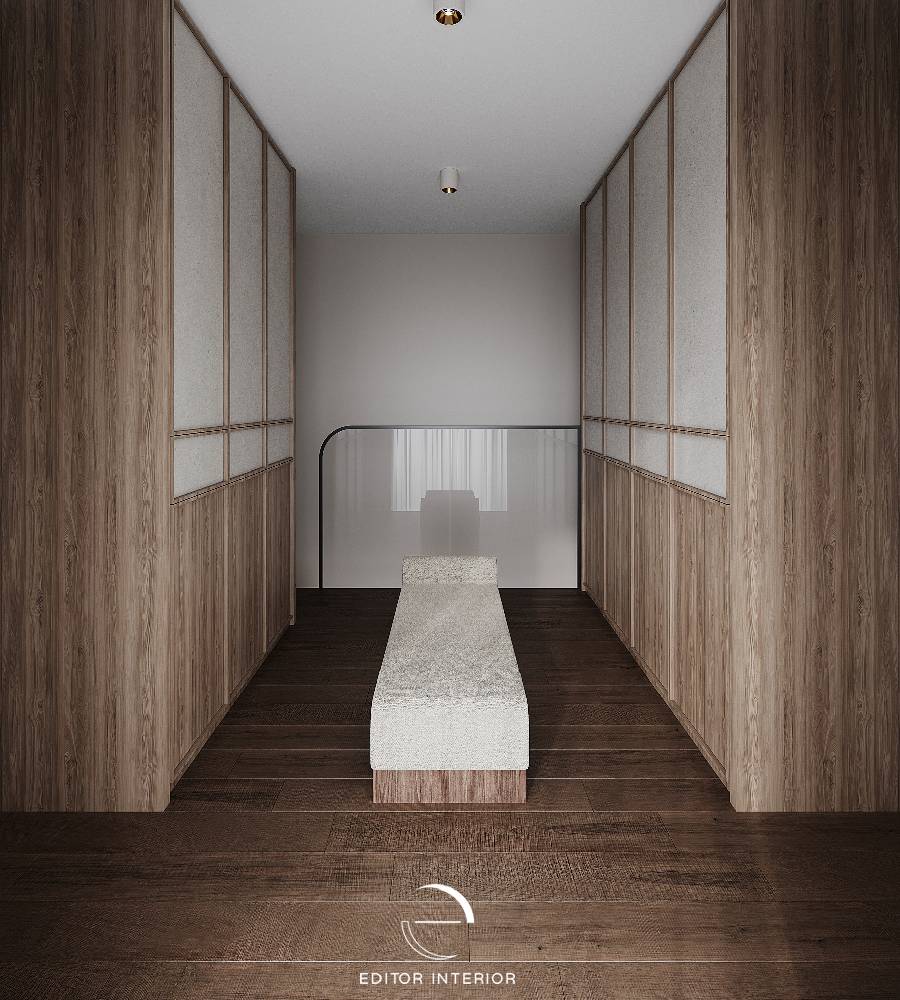
The upper-level walk-in wardrobe is lined on both sides with full-height cabinetry in a two-tone wood veneer and textured panels, with a boucle bench positioned in front of the glass balustrade at the far end, which looks back down towards the living area below. The timber flooring runs consistently through this level, and the wardrobe corridor feels like a room in its own right rather than a space you pass through quickly, which is one of the quieter ways a loft home can feel more generous overall.
Bringing a Loft Layout to Its Full Potential
Getting the most out of a loft unit goes beyond choosing the right furniture or finishes. It requires a clear understanding of how vertical space works, how levels connect, and how each room contributes to the overall feel of the home.
Each loft project at Editor Interior is approached with a close look at how the layout can be made to work harder for the people living in it. From custom carpentry that makes use of every corner to material palettes that carry cohesively across floors, every decision is made with the homeowner’s daily life in mind.
If you are considering a loft renovation and want to explore what thoughtful, level-by-level planning could look like for your home, get in touch to find out how considered design can help you create a loft interior that feels spacious, warm, and genuinely liveable.