



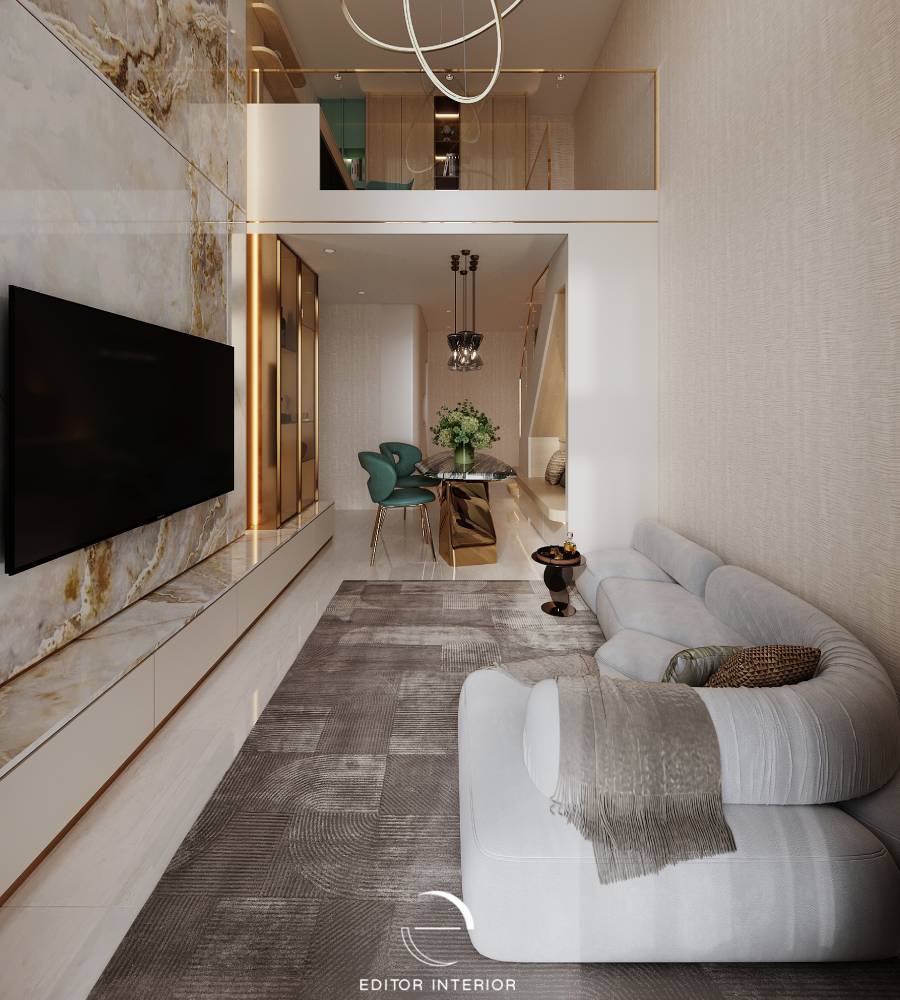
When you are planning a loft interior and the feature wall runs from the ground floor to the upper level, the material you choose for that surface does a lot of heavy lifting. A double-volume wall is one of the most visible surfaces in the entire home, and what covers it will shape how the whole space feels. Natural marble and sintered stone are both strong candidates for a surface at this scale, but they behave very differently in practice, and understanding those differences is what helps you make a decision you will not second-guess later.
This Lumina Grand EC loft is a useful reference point. The full-height feature wall in the living area features a dramatic onyx-effect slab with sweeping gold veining that runs from the ground floor to the upper level, and the large sculptural gold ring pendant above it reinforces the warmth and movement of the stone. In loft interior design, a wall like this does more than fill a surface; it sets the visual identity of the entire home from the moment you walk in.
What Natural Marble Brings to a High Wall
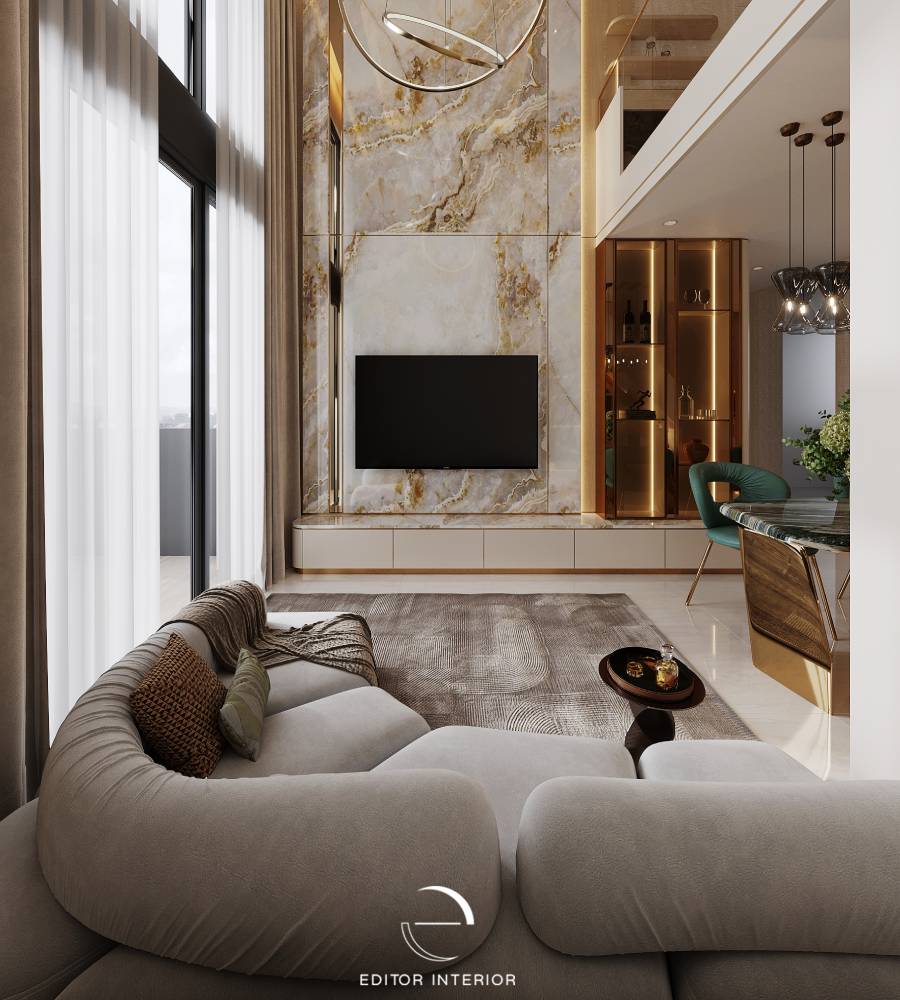
Natural marble is quarried, cut, and finished, which means every slab is genuinely unique. The veining, the depth of colour, and the way light moves across the surface are qualities that are difficult to replicate convincingly. On a double-volume wall, where the surface is large enough to be read as a whole composition, a well-chosen marble slab can look exceptional.
That said, natural marble on a high-span wall comes with practical considerations. Marble is porous, which means it requires sealing and ongoing maintenance, particularly in humid climates. At height, any staining or etching is both more visible and harder to address. Marble is also heavier than sintered stone, which has structural implications when cladding a wall that spans two levels. The material and installation costs are typically higher, and matching slabs for a seamless continuous run across a large surface requires careful selection at the quarry stage.
For homeowners who want the authenticity and one-of-a-kind character of natural stone and are prepared for the maintenance requirements, marble remains the benchmark. The onyx-effect wall at Lumina Grand captures exactly this quality: the depth and movement of the veining is something that only a natural material can produce convincingly at this scale.
What Sintered Stone Offers Instead
Sintered stone is an engineered material produced by subjecting natural minerals to extreme heat and pressure, a process that creates a dense, non-porous surface with very high resistance to heat, scratches, and staining. For a high-span wall in a loft, these properties are genuinely relevant. A surface that does not require sealing, does not stain easily, and can be cleaned without specialist products is a practical advantage when the wall in question is several metres tall and not easy to maintain.
Sintered stone is also produced in large-format slabs, which makes it well-suited to continuous runs on tall walls. The consistency across panels is easier to control than with natural stone, and the weight is lower, which simplifies installation at height. From a cost perspective, sintered stone tends to be more accessible than premium natural marble, which provides greater flexibility in how the budget is allocated across the rest of the project.
The trade-off is that sintered stone, however well produced, reads differently up close than natural marble does. The depth and variation of a material formed over millions of years are hard to fully replicate, and on a surface as prominent as a double-volume feature wall, that difference can be felt even if it is not immediately obvious. Advances in production have made sintered stone increasingly convincing, but for those who want the real thing, it remains a substitute rather than an equivalent.
How to Decide
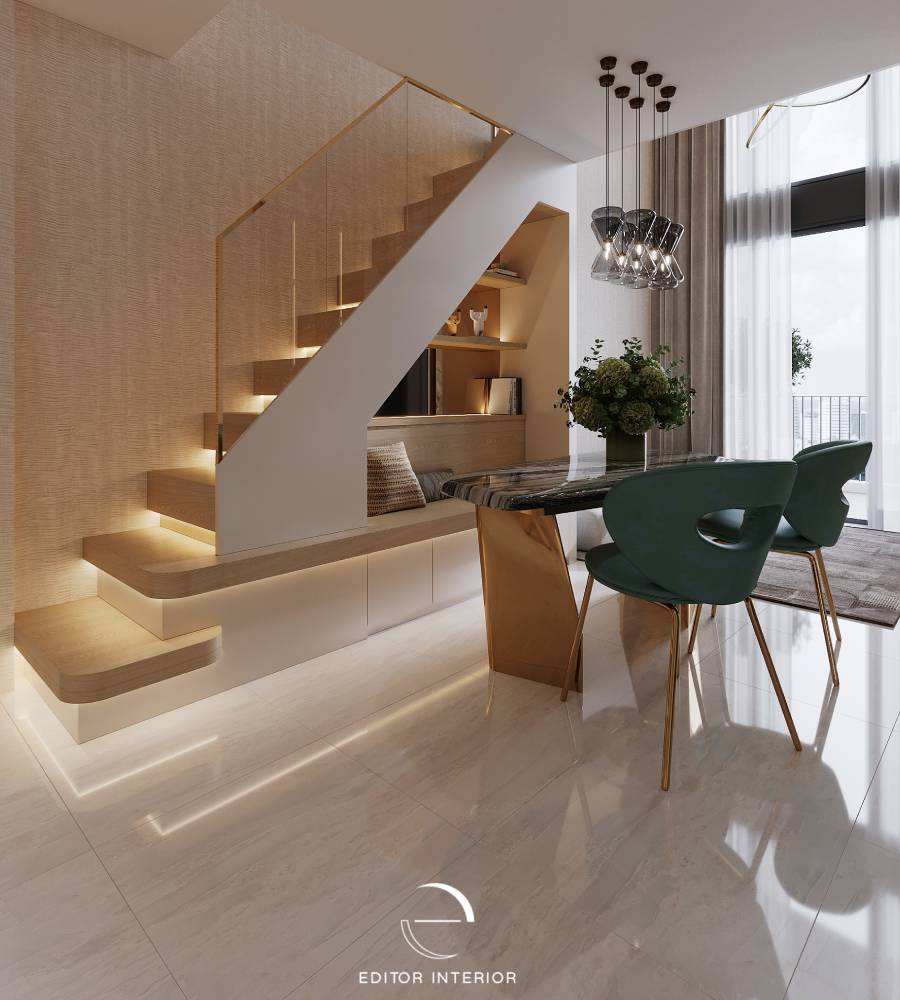
The right choice depends on how the wall will be used, what the rest of the home looks like, and how much ongoing maintenance you are willing to commit to. A few questions worth working through before deciding:
- How prominent is the wall and how much natural light falls on it throughout the day?
- Is the veining pattern a key part of the design intent, or is the overall tone and colour more important?
- What is the structural capacity of the wall, and what does the installation method allow for?
- How accessible is the wall for cleaning and future maintenance?
For loft units where the feature wall is the centrepiece of a double-volume living area, these questions carry real weight. The neutral tones and natural light of a loft can shift significantly depending on whether the anchor material reads warm and organic or cool and engineered.
Choosing the Right Material for Your Space
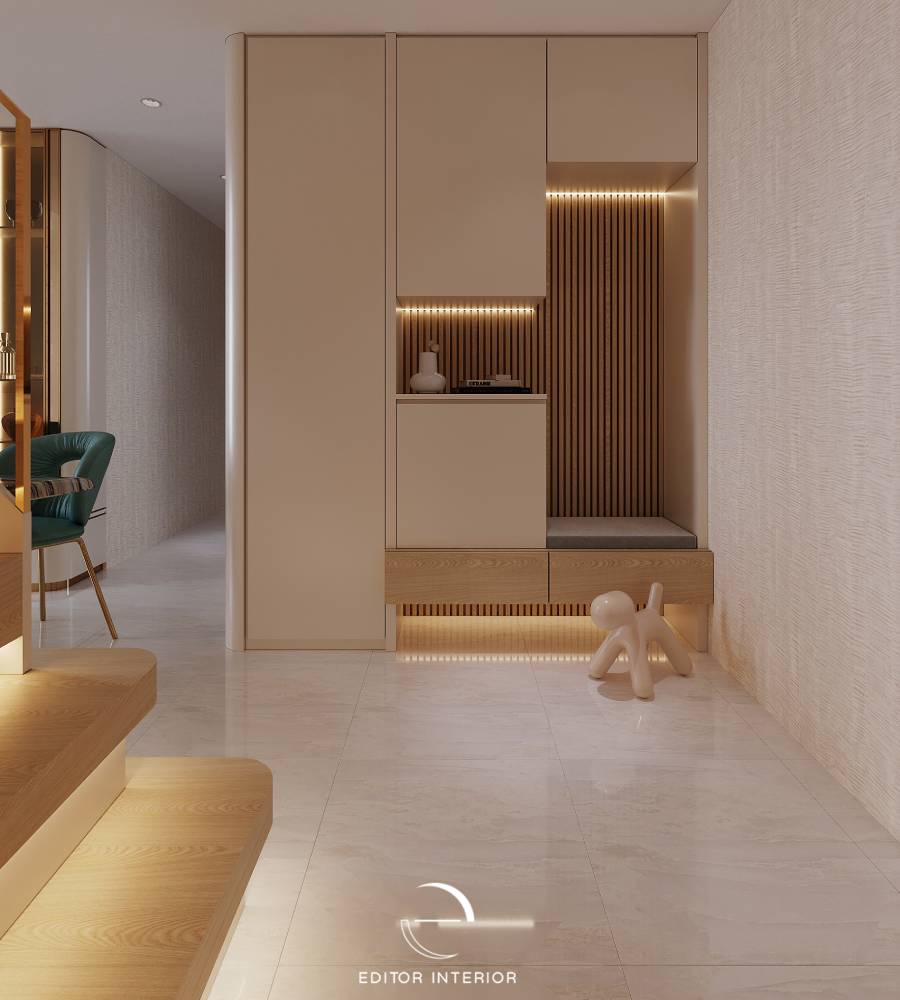
A feature wall that spans two levels is one of the most permanent decisions in a loft renovation, and the choice of material sits at its centre. The scale changes everything, and what reads well as a sample or in a small application behaves differently when it runs from floor to ceiling across two storeys. That is where the practical considerations around weight, installation, maintenance, and visual continuity become as important as aesthetics.
Getting that decision right early in the planning process means the rest of the interior can be built around it with confidence. At Editor Interior, that decision is approached with close attention to how a material performs at scale, how it ages, and how it connects to the home’s overall design intent. If you are planning a loft and want to think through which material makes sense for your feature wall, get in touch to start the conversation.